
Slot RTP, Volatility & Strategy Hub
Return to the main pillar overview for high rtp slots.
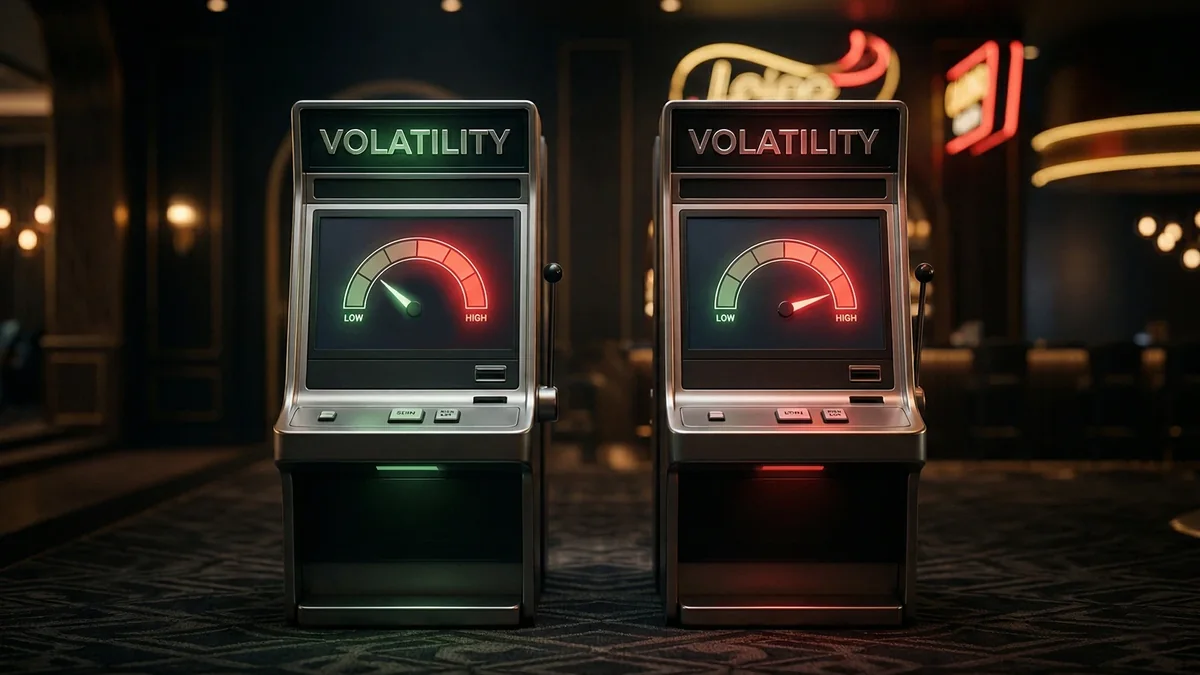
Many beginners ask what is volatility in slot games right after experiencing two completely opposite sessions on the same evening. On one game, a ₱300 balance lasts nearly forty minutes with steady small wins; on another, ₱500 vanishes in twelve minutes without a single bonus trigger.
Both titles might share a 96.8% Return to Player rating, yet their risk profiles sit worlds apart. This guide explains low, medium, and high slot variance using concrete Philippine Peso bankroll examples so you can pick games that actually match your wallet.
Run through these five practical steps before spinning any new slot machine with real GCash or Maya funds.
| Volatility Classification | Typical Hit Frequency | Common Payout Shape | Sample PHP Bankroll & Bet |
|---|---|---|---|
| Low Volatility | 30% – 45% of spins win | Frequent 0.5x to 5x line returns | ₱300 budget at ₱2/spin (150 spins) |
| Medium Volatility | 22% – 30% of spins win | Regular 2x–15x hits plus 40x–100x bonuses | ₱1,000 budget at ₱5/spin (200 spins) |
| High Volatility | 12% – 20% of spins win | Long empty patches; rare 100x–1,000x bursts | ₱2,500 budget at ₱10/spin (250 spins) |
| Extreme Variance | Under 15% of spins win | Heavy top-prize weighting in rare features | ₱4,000+ budget at ₱10/spin (400 spins) |
Beginners frequently treat RTP and volatility as synonyms, yet they measure separate dimensions of slot math. As covered in our RTP slot machine breakdown, Return to Player sets the long-run statistical average, while volatility controls the size and spacing of wins.
Picture two tricycle drivers earning ₱1,000 a day on average: one collects steady ₱25 fares every ten minutes, while the other waits hours for rare ₱400 provincial charters. Return to our high RTP slots hub whenever you want to balance both metrics together.
If your goal after work is relaxing entertainment on a ₱200 or ₱300 e-wallet transfer, low-variance reels are your safest ally. Frequent small matches cushion downward dips so your balance declines gradually rather than plummeting in ten rounds.
Classic compact titles like Money Coming JILI style single-focus reels appeal to Filipino players who enjoy brisk, transparent feedback without waiting endlessly for three scatter icons. You trade away 2,000x jackpot dreams in exchange for predictable pacing.
Look for tight payout gaps between three-of-a-kind and five-of-a-kind icons, alongside frequent wild substitutions or simple wheel multipliers instead of multi-stage free spins.
Medium volatility hits the sweet spot for most Filipino slot enthusiasts depositing ₱800 to ₱1,200 via GCash. At ₱5 per spin, a ₱1,000 budget provides 200 base spins—plenty of runway for cascading base-game combos plus one or two realistic shots at a free-spin bonus.
Fan favorites such as Super Ace JILI cascading card slots sit squarely in this balanced territory. Regular golden-card wild conversions deliver 4x to 20x hits between scatter hunts, keeping energy high without draining your balance in five minutes.
Nothing surprises beginners more than twenty empty rounds in a row on a popular jackpot game. Yet mathematically, those quiet stretches pay for the 200x to 1,000x explosions waiting inside high-tier bonus rounds.
Before loading heavy stakes onto intense reels, study our dedicated high volatility slot machines survival guide. Treating high-variance slots like low-variance games with an undersized ₱300 deposit is the fastest route to an empty wallet.
Game designers balance every slot around two levers: how often any winning combination lands (hit frequency) and how big the top prizes climb (max multiplier). Raising maximum win potential to 5,000x or 10,000x forces the math engine to tighten everyday base-game hits.
Studio specs published across the official JILI Games portfolio illustrate this trade-off clearly. Titles showcasing colossal top prizes carry steeper variance curves than compact multiplier slots designed for steady casual rounds.
When you bet ₱5 and win ₱2 back on a single payline, celebratory sounds still play even though your net session balance dropped by ₱3. Counting true net-positive hits gives a much clearer picture of real volatility.
Smart Filipino players never guess a slot's temperament with real payroll cash. Spend five minutes inside JILI demo slot free-play mode tracking how fast a 1,000-credit virtual balance moves across 50 test spins.
Pair those test notes with strict PHP casino bankroll management rules before switching to cash play. If demo testing shows two consecutive 25-spin dry spells, scale down your live bet size accordingly.
Not every casino lobby displays a neat 'High/Medium/Low' volatility badge beside each thumbnail. Fortunately, inspecting three numbers inside any paytable—top symbol ratio, scatter count rules, and multiplier ceilings—gives away the variance tier instantly.
Alongside reading paytables, confirm your chosen site passes standard PAGCOR compliance and safety checks. You can verify operator authorization anytime directly on pagcor.ph before connecting your e-wallet.
Access to real-money online slots in the Philippines is restricted strictly to players aged 21 years old and above (21+). Treat pre-funded deposit caps, volatility limits, and time alarms as strategic guardrails put in place before you spin, and confirm active licensing via pagcor.ph.
Whenever variance feels stressful or tempts you to chase a cold streak, request self-exclusion that activates within 24 hours across web browsers and the mobile app alike. Free, confidential support is ready through the National Council on Problem Gambling Philippines, Gamblers Anonymous Philippines, and the PAGCOR Responsible Gaming Helpline.
Knowing what is volatility in slot games puts you in charge of session pacing before the first reel turns. Low-variance titles keep ₱300 budgets humming with steady base returns, medium-variance cascades reward ₱1,000 envelopes with balanced bonus action, and high-volatility machines demand ₱2,500+ spin cushions to ride out cold patches safely. Test every unfamiliar game in demo mode first and verify operator legitimacy on pagcor.ph. When you are ready to enjoy certified reels responsibly as a 21+ player, invite your friends to register and play and get a chance to earn bonuses of up to ₱50,000.00, and get a chance to win up to ₱100,000.00 plus unlock exclusive Mystery Chests on qualifying promos.
Low or low-medium volatility is far better for a ₱300 deposit. At ₱2 per spin, ₱300 gives you 150 base spins, and frequent small payouts help extend playtime; high-volatility slots can burn ₱300 in 30 spins before any bonus feature lands.
No. Volatility changes how wins are distributed over time—frequent small hits versus rare big spikes—while keeping the long-term average RTP at 96%. Both high- and low-variance 96% slots converge toward the same statistical return over millions of spins.
Running 50 to 100 demo spins gives beginners a practical snapshot of hit rhythm, dry-spell length, and base-game payouts. While 50 spins cannot predict your exact live outcome, it quickly exposes whether a title drains credits rapidly between bonus features.
Low-to-medium volatility slots generally work best when clearing wagering requirements, provided they carry 96.5%+ RTP. Steady base hits preserve your balance through hundreds of required rollover spins instead of risking an early bust during a long cold streak.
High-volatility math concentrates a larger portion of total RTP inside rare free-spin multipliers and jackpot combinations. To fund those 100x to 1,000x bursts without breaking the 96%–97% RTP budget, everyday base spins deliver fewer frequent payouts.